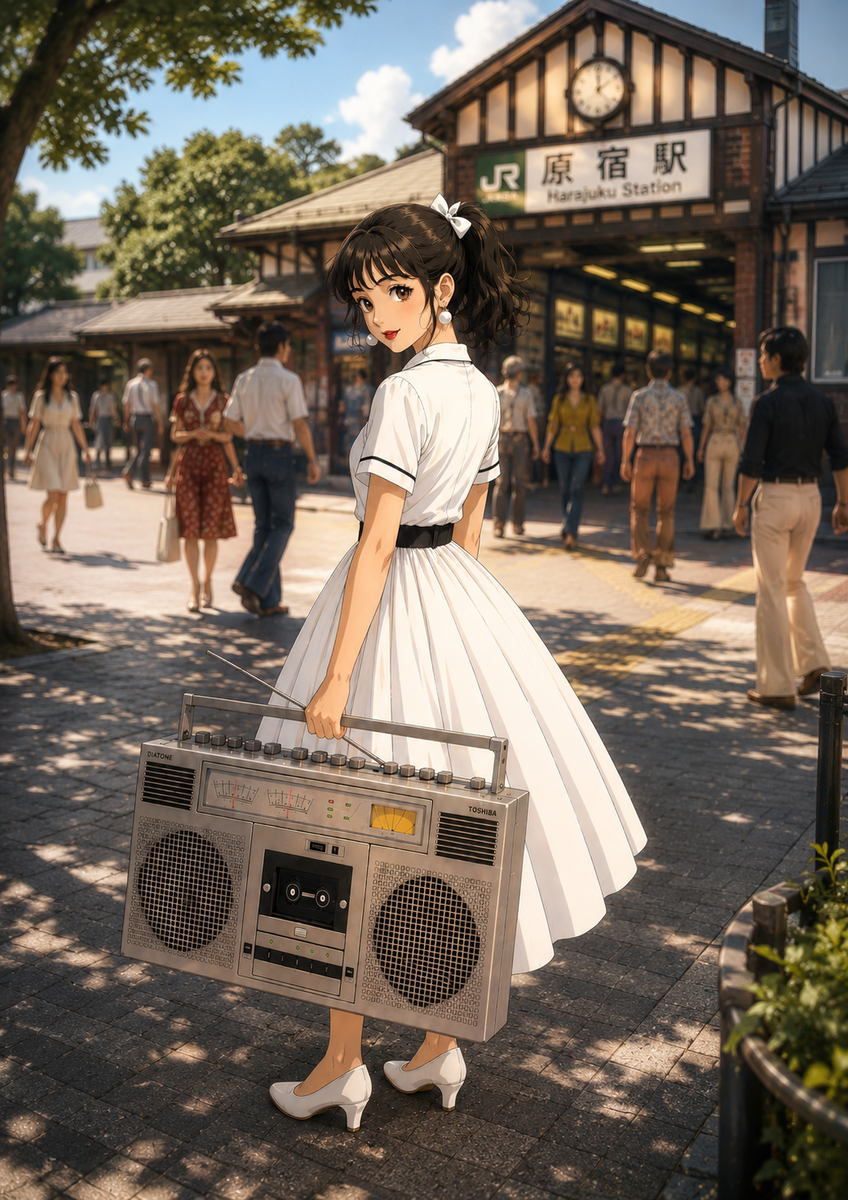
歩道橋の上から見物する人たちが、少しずつ増えてきた頃でした。
いつの間にか歩道橋には、
前の方は、立ち止まって見る人。
後ろの方は、通り抜ける人。
誰かが決めたわけでもないのに、そんな自然な決まりごとのようなものができていました。
It was around this time that more and more people began stopping on the pedestrian bridge to watch us dance.
Before we knew it, a quiet pattern had emerged.
Those at the front stopped to watch.
Those behind them kept walking past.
No one had decided on any rules, yet this unspoken arrangement had naturally fallen into place.
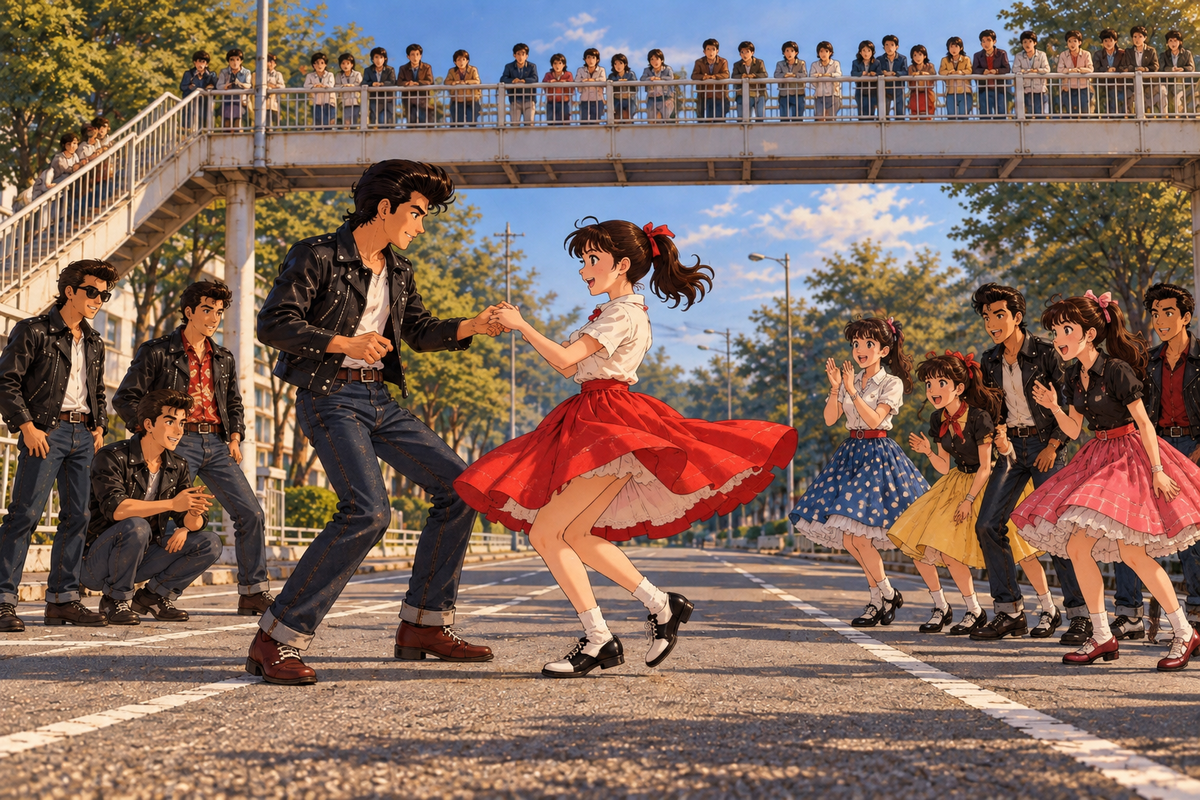
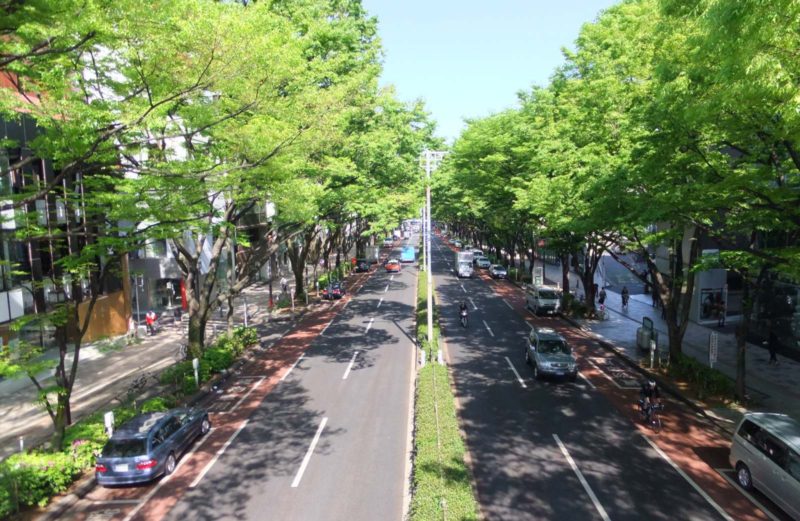
下の車道では、私たちがロックンロールを踊る。
上の歩道橋では、それを見物する人たちがいる。
そんな光景も、もう珍しいものではなくなっていました。
そして――
最初の「たけのこ族」が現れたのは、たしか、そんな頃だったと記憶しています。
1978年の終わり頃から、1979年のはじめ頃だったでしょうか。
竹下通りの「竹の子ブティック」の衣装を着た男女数人が、ホコ天に現れました。
その中には、リーダー格らしい少年がいて、大きなラジカセを肩に担いでいました。
まだ、その頃はホコ天を取り上げるテレビや雑誌も、それほど多くはありませんでした。
だから最初に彼らを見た時、私は、
「今日は様子を見に来たのかな」
そんなふうに思ったような気がします。
Down on the street, we danced to rock ’n’ roll.
Up on the pedestrian bridge, people watched us.
By then, the scene had become a familiar sight.
And then—
If I remember correctly, it was around that time that the first “Takenoko-zoku” appeared.
Perhaps it was late 1978 or early 1979.
A small group of young men and women arrived in the pedestrian-only area, wearing outfits from Takenoko Boutique on Takeshita Street.
Among them was a boy who seemed to be their leader, carrying a large boombox on his shoulder.
Back then, there still wasn’t much television or magazine coverage of the pedestrian-only streets.
So when I first saw them, I think my reaction was something like:
“Maybe they’ve just come to see what it’s like today.”
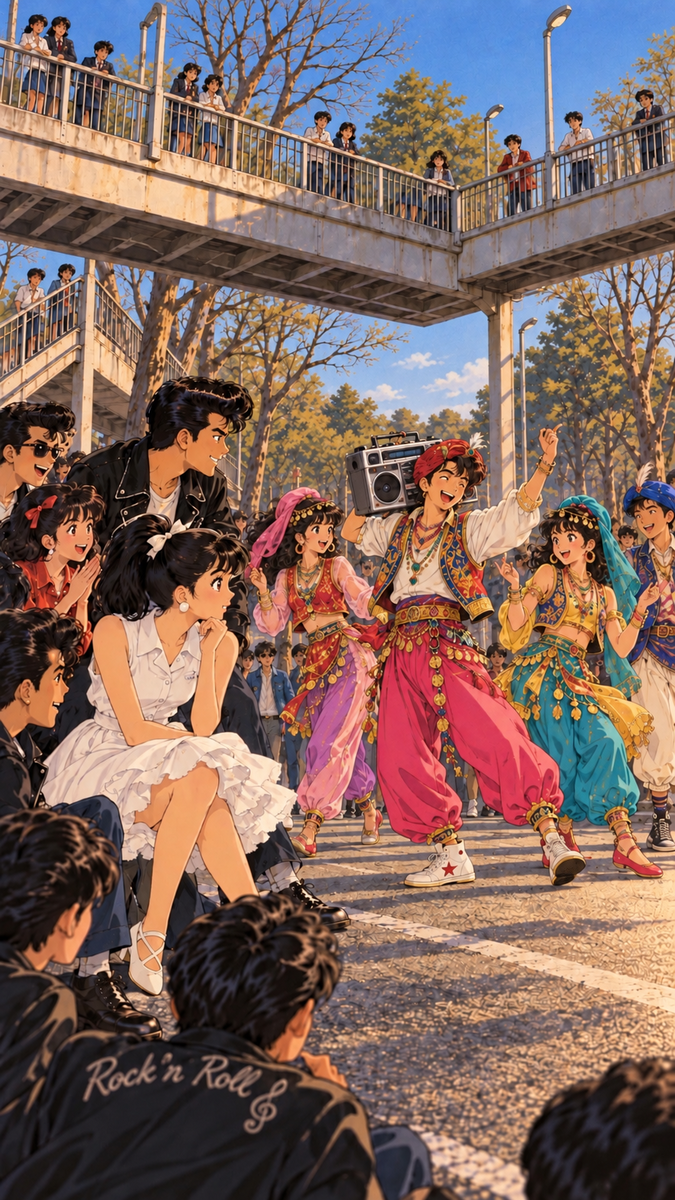
彼らは、私たちロックンローラーの近くにはきませんでした。
そして、その日から少し離れた場所で、自分たちの音楽を鳴らし、自分たちの踊りを踊り始めたのです。
They didn’t come near us rock ’n’ rollers.
Instead, from that day on, they began playing their own music and dancing their own way a little farther away from us.
それまでホコ天で目立っていた音楽といえば、やはりロックンロールでした。
私たちはロックンロールのリズムに合わせて踊り、それが私たちのスタイルでした。
もしかしたら、あの頃の私たちにとってロックンロールは、ただの音楽ではなかったのかもしれません。
好きな服を着て、
好きな音楽を流して、
誰にも言われることなく、
自分たちの好きなように踊る。
それは、私たちなりの「自由」の形だったのだと思います。
Until then, rock ’n’ roll had been the music that stood out most on the pedestrian-only streets.
We danced to its rhythm. That was our style.
Perhaps, for us back then, rock ’n’ roll was more than just music.
Wearing the clothes we loved,
playing the music we loved,
and dancing however we pleased,
without anyone telling us what to do.
I think that was our own way of being free.
もちろん、
「いつかは、また別のグループが出てくるだろう」
そんな予感はありました。
ホコ天に集まる人が増えていけば、私たちを見て、
「自分たちも何かやってみたい」
と思う人が出てくる。
それは、ごく自然なことでした。
Of course, we had a feeling that sooner or later, another group would appear.
As more people gathered on the pedestrian-only streets, some would see us and think,
“We’d like to try something of our own, too.”
That was only natural.
ただ――
私たちの次に現れたのが、別のロックンロールグループではなかったことに、私は少しだけ寂しさを感じました。
「ああ、ロックンロールじゃないんだ……」
そんな気持ちでした。
同じ音楽が好きな人たちが増えて、
また新しいロックンロールのグループが生まれる。
どこかで、そんなことを期待していたのかもしれません。
But—
I felt a little sad that the next group to appear wasn’t another rock ’n’ roll group.
“Oh… so it’s not rock ’n’ roll.”
That was how I felt.
Perhaps part of me had hoped that more people would come to love the same music we did, and that another rock ’n’ roll group would form.
けれど、現れたのは私たちとはまったく違う服を着て、まったく違う踊りを踊る若者たちでした。
それが、後に「たけのこ族」と呼ばれる人たちへとつながっていったのです。
Instead, the young people who appeared wore clothes completely different from ours and danced in an entirely different way.
They were the beginnings of what would later become known as the “Takenoko-zoku.”
それでも、その頃はまだ、
下で踊っているロックンローラーや、たけのこ族よりも、
歩道橋の上から見ている人たちの方が、ずっと多かったように思います。
Even then, I think there were still far more people watching from the pedestrian bridge than there were rock ’n’ rollers or Takenoko-zoku dancing on the street below.
原宿・代々木の歩行者天国には、正式なルールがあったわけではありません。
けれど不思議なことに、そこには自然と生まれた暗黙の了解がありました。
場所取りもそうでした。
早く来た人から、歩道橋に近い場所を取っていく。
そして、その隣、そのまた隣と、少しずつ埋まっていく。
それが自然な流れになっていました。
There were no official rules for the pedestrian-only streets of Harajuku and Yoyogi.
Yet somehow, an unspoken understanding had naturally developed among us.
The same was true of choosing our spots.
Those who arrived first would claim the spaces closest to the pedestrian bridge.
Then the spot beside them would fill up, followed by the next, and so on.
That was simply how things came to work.
ところが、たとえ、たけのこ族が私たちより先に来た日があったとしても、
私たちがいつも使っていた歩道橋の下の場所を、たけのこ族が取るようなことはありませんでした。
また、、歩道橋で見物していた人たちも、下へ降りてくることはありませんでした。
Yet even on days when the Takenoko-zoku arrived before us, they never took the spot beneath the pedestrian bridge where we always danced.
And the people watching from the bridge never came down to join us on the street below.
下は、踊る人たちの場所。
上は、見る人たちの場所。
誰かが線を引いたわけではないのに、みんながそれを分かっていたのです。
The street below was for those who danced.
The bridge above was for those who watched.
No one had drawn a line between the two, yet everyone understood.
今になって思えば、
あの歩行者天国は、大きな野外劇場のようなものだったのかもしれません。
車道が舞台。
歩道橋が観客席。
その間には、柵もなければ、係員もいない。
それでも、ひとつの空間として成り立っていました。
Looking back now,
perhaps those pedestrian-only streets were like one great open-air theater.
The roadway was the stage.
The pedestrian bridge was the audience seating.
There were no barriers or attendants between the two.
And yet, it all came together as one shared space.
ほんの少し前まで、
日曜日になっても人が数えられるほどしかいなかった場所でした。
私たちが初めて踊り始めた頃には、
こんな景色になるなんて、想像もしていませんでした。
Only a short time before, there had been so few people there—even on Sundays—that you could count them.
When we first started dancing, we never imagined it would become a scene like this.
ある日。
テッドと私は、仲間たちが作った輪の真ん中でジルバを踊っていました。
音楽が流れると、テッドと私はいつものように向き合いました。
回って、
離れて、
また手を取る。
そして、テッドが私の手を引き、
私は彼の足の間をくぐるように滑り抜けました。
One day, Ted and I were dancing the jitterbug in the middle of a circle formed by our friends.
As the music played, we faced each other as we always did.
Spinning,
moving apart,
then taking each other’s hands again.
Then Ted pulled me by the hand, and I slid between his legs.
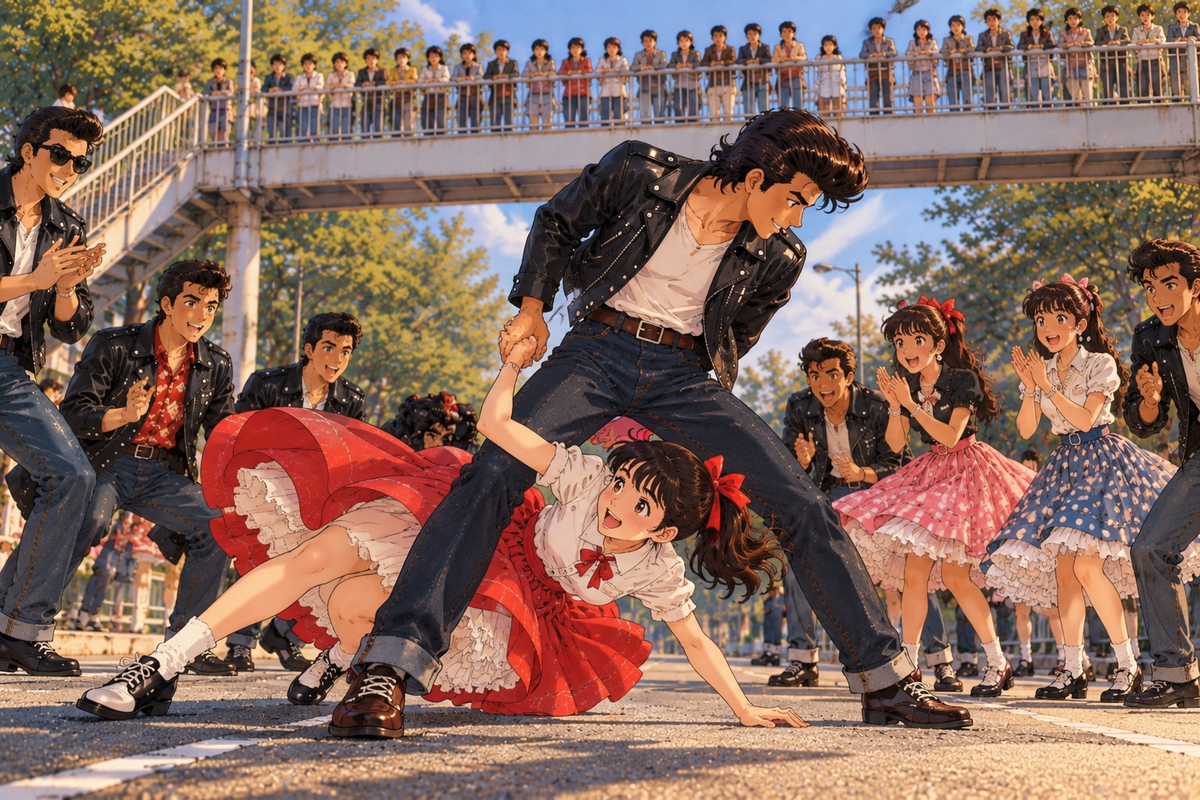
そこから勢いよく引き上げられ、
今度はテッドが私を抱きかかえる。
私の身体を支えたまま、
テッドは左右へ大きく足を踏み出しました。
大股で右へ。
そして左へ。
Then he pulled me swiftly back up,
and this time, Ted scooped me into his arms.
Holding me securely,
he took wide steps from side to side.
A big step to the right.
Then to the left.
何度も踊っている私たちには、
次に相手がどう動くのかが分かっていました。
そして、最後の音が止まった、その時でした。
We had danced together so many times that we knew how the other would move next.
And then, just as the last note faded, it happened.
パチパチパチ――。
上から拍手が聞こえてきました。
顔を上げると、
歩道橋で見ていた人たちが、こちらに向かって拍手をしていました。
Clap, clap, clap—
Applause came from above.
When I looked up,
the people watching from the pedestrian bridge were clapping for us.
最初は、ほんの数人だったのかもしれません。
けれど、一人が拍手を始めると、
その隣の人も、
またその隣の人も、
つられるように手を叩き始める。
気がつけば、歩道橋の上からたくさんの拍手が降ってきていました。
Perhaps it was only a few people at first.
But once one person began to clap,
the person beside them joined in,
then the next,
as though drawn along by the others.
Before we knew it, applause was raining down from the pedestrian bridge.
拍手というのは、不思議なものです。
誰か一人が始めると、
周りの人まで、なぜか一緒に手を叩きたくなる。
そして、自分がしたことに対して拍手をもらって、
嫌な気持ちになる人なんて、きっといません。
Applause is a curious thing.
When one person starts clapping,
somehow, those around them feel like joining in.
And surely no one feels bad about receiving applause for something they’ve done.
14歳だった私は、その時初めて、
人の気持ちや行動というものは、
こんなふうに周りへ伝わっていくものなのだと知りました。
I was fourteen, and in that moment, I understood for the first time how people’s feelings and actions could spread to those around them.
一人が笑えば、誰かも笑う。
一人が踊れば、誰かが立ち止まる。
一人が拍手をすれば、その拍手が広がっていく。
それが、なんだかとても面白く感じられました。
When one person smiles, someone else smiles too.
When one person dances, someone stops to watch.
When one person claps, the applause spreads.
Somehow, I found it all fascinating.
あの時だったのかもしれません。
原宿のホコ天で、
「踊る人」と「見る人」の関係が、はっきり形になったのは。
Perhaps that was the moment
when the relationship between “those who danced” and “those who watched”
took clear shape on Harajuku’s pedestrian-only streets.
下の車道が舞台。
上の歩道橋が観客席。
誰が決めたわけでもないのに、
いつの間にか、そんな劇場が出来上がっていました。
The street below was the stage.
The pedestrian bridge above was the audience seating.
No one had planned it,
yet somehow, a theater had taken shape.
風に乗って聞こえてくるロックンロールの音楽につられて来たのか。
歩道橋から聞こえる拍手につられて来たのか。
それとも、
「原宿で若い子たちが何か面白いことをやっているらしい」
そんな話を誰かから聞いて来たのか。
少しずつ、知らない人たちが増えていきました。
Perhaps they were drawn by the rock ’n’ roll music drifting on the breeze.
Perhaps it was the applause from the pedestrian bridge.
Or perhaps someone had told them,
“Apparently, some young people are doing something interesting in Harajuku.”
Little by little, more unfamiliar faces began to appear.
そして――
私の記憶では、たしかその頃でした。
原宿のホコ天の様子を取り上げるために、テレビ局が取材へやって来たのは。
カメラが向けられるようになる。
雑誌が来るようになる。
見物人が増えていく。
And then—
If I remember correctly, it was around that time that a television crew came to cover the scene on Harajuku’s pedestrian-only streets.
Cameras began turning toward us.
Magazine reporters started coming too.
And the crowds kept growing.
そして、私たちとは違う踊りをする若者たちも現れ始める。
And young people who danced differently from us began to appear, too.
私たちのロックンロールも、
原宿のホコ天も、
知らないうちに新しい時代へ向かい始めていたのかもしれません。
Perhaps both our rock ’n’ roll
and Harajuku’s pedestrian-only streets
had begun moving toward a new era without us even realizing it.
それでも、
あの頃の私にとっては、
テレビに映ることよりも、
有名になることよりも、
日曜日になれば仲間が集まり、
大好きなロックンロールをかけて、
ただ夢中で踊ることの方が、ずっと大切でした。
Even so,
to me back then,
what mattered far more than appearing on television
or becoming famous
was gathering with my friends every Sunday,
playing the rock ’n’ roll we loved,
and losing myself in the joy of dancing.
あの場所にいた時だけは、
誰にも何も言われない。
好きな服を着て、
好きな音楽で、
好きなように踊ることができた。
Only when I was there
could I be free from anyone telling me what to do.
I could wear the clothes I loved,
dance to the music I loved,
and move however I pleased.
私は、あの場所で初めて、
「自由」というものを身体で感じていたのかもしれません。
Perhaps it was there that, for the first time, I felt freedom with my whole body.
そして、14歳だった私は、
まだ知りませんでした。
歩道橋の上から降ってきた、あの拍手も。
大きなラジカセを肩に担いで現れた少年たちも。
テレビカメラも。
少しずつ増えていった見物人も。
その一つ一つが、
これから原宿の景色を大きく変えていく始まりだったことを。
And at fourteen,
I had no idea yet.
The applause raining down from the pedestrian bridge.
The boys who appeared with a large boombox carried on a shoulder.
The television cameras.
The steadily growing crowds.
Each of these was part of the beginning
of a change that would transform the face of Harajuku.
そして、
あの日曜日には、数えるほどしか人がいなかったあの場所が、
やがて全国に知られる場所になっていくことを――。
And that the place where only a handful of people had gathered that Sunday
would one day become known throughout Japan—
⭐️変わりゆく原宿 昔を思い出しながら⭐️
読者へのメッセージ
⚫︎
皆さん、こんにちは!このブログでは、1970年代後半から始まった原宿ホコ天ロックンロールの真実の歴史をお伝えしていきます。私はその始まりを見てきた者として、当時のエピソードや思い出を皆さんと共有したいと思います。
Hello everyone! In this blog, I will tell you the true history of Harajuku Hokoten Rock and Roll, which started in the late 1970s. As someone who witnessed its beginnings, I would like to share with you some stories and memories from that time
⚫︎
私と同じように当時の原宿を体験した方々には、若かりし日の思い出を振り返りながら楽しんでいただければ幸いです。また、初めてこの文化に触れる方々には、その魅力を存分に感じてもらえるよう、様々な視点からお話ししていきます。
ぜひ、コメントや質問を通じて、皆さんの思い出やご意見をお聞かせください。
⚫︎
当時のホコ天の熱気とエネルギーと魅力をこのブログを通じて、多くの方にお伝えできればと思っています。
I hope that through this blog I can convey to many people the excitement, energy and charm of the Hokoten at that time.
💫
🎙️
🎵 夢を信じて前に進む
私は強くて無敵のババドル
過去も未来も乗り越えて
新しい物語を紡いでいく🎵
🎙️
🎵 Believe in your dreams and move forward
I’m a strong and invincible Babadol
I’ll overcome the past and the future
I’ll spin a new story🎵💫
🔴 次回・next time
メディアからの注目が高まると… As media attention increases…
